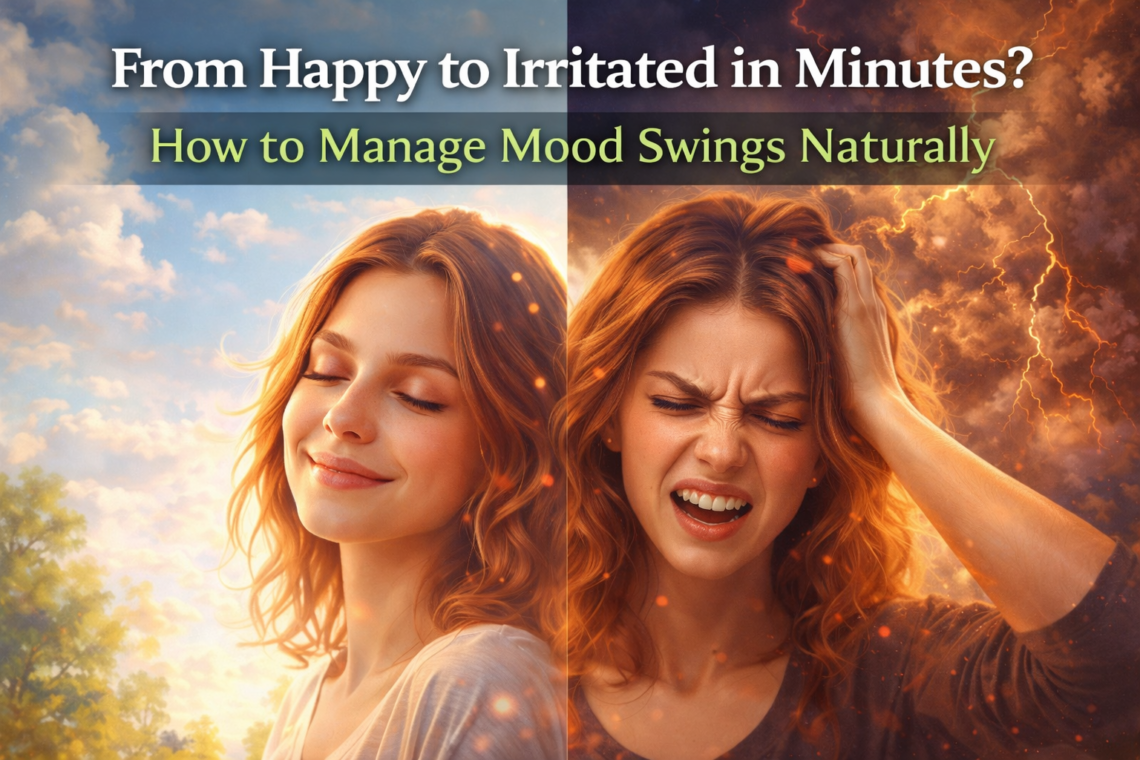
“Tired of Sudden Mood Swings?
Struggling with sudden mood swings? Discover natural, science-backed wellness tips to manage emotional ups and downs, balance hormones, and improve mental well-being.
From Happy to Irritated in Minutes? How to Manage Mood Swings Naturally
One moment you’re smiling and feeling positive. The next, you’re irritated, overwhelmed, or emotionally drained — and you’re not even sure why. If this sounds familiar, you’re not alone. Mood swings are more common than we realize, and they can affect productivity, relationships, and overall well-being.
The good news? You don’t have to let your emotions control your day. With the right wellness habits, you can stabilize your mood naturally and feel more balanced.

Why Do Mood Swings Happen?
Mood swings are often your body’s way of signaling imbalance. They can be linked to:
Hormonal fluctuations
Poor sleep
High stress levels
Blood sugar imbalance
Nutrient deficiencies
Lack of physical activity
For many women, hormonal changes during menstrual cycles, pregnancy, or menopause can intensify emotional shifts. But men experience mood fluctuations too — often triggered by stress, lack of rest, or lifestyle habits.
Understanding the root cause is the first step toward managing it.
Balance Your Blood Sugar First
Sudden irritability is often connected to drops in blood sugar. Skipping meals, consuming too much caffeine, or eating high-sugar snacks can cause energy crashes that directly affect mood.
To stabilize emotions:
Eat balanced meals with protein, healthy fats, and fiber
Avoid long gaps between meals
Reduce refined sugar and processed foods
Stay hydrated throughout the day
When your blood sugar is steady, your mood becomes more stable too.
Prioritize Deep, Quality Sleep
Sleep is one of the most powerful mood regulators. Even one night of poor sleep can increase irritability and emotional sensitivity.
Create a simple sleep routine:
Sleep at the same time daily
Avoid screens 1 hour before bed
Reduce caffeine after evening
Keep your bedroom cool and dark
When your brain is well-rested, emotional control becomes easier.

Move Your Body — Even a Little
Exercise is a natural mood stabilizer. Physical activity releases endorphins — your body’s natural “feel-good” hormones.
You don’t need intense workouts. Even:
20 minutes of walking
Light yoga
Stretching
Dancing to your favorite music
can significantly improve emotional balance.
Consistency matters more than intensity.
Manage Stress Before It Manages You
Chronic stress is one of the biggest triggers of mood swings. When cortisol (the stress hormone) remains high, it disrupts emotional regulation.
Try simple stress-management techniques:
Deep breathing exercises
5-minute mindfulness breaks
Journaling your thoughts
Spending time in nature
Limiting social media overload
Small daily relaxation rituals can create long-term emotional stability.
Check Your Nutrient Intake
Certain nutrients directly impact mood, including:
Magnesium
Vitamin B-complex
Omega-3 fatty acids
Vitamin D
Deficiencies can contribute to anxiety, irritability, and fatigue. Focus on whole foods like leafy greens, nuts, seeds, fatty fish, and fruits.
If mood swings are frequent and intense, consider consulting a healthcare professional for proper evaluation.
Create Emotional Awareness
Sometimes mood swings are not just physical — they’re emotional build-ups. Suppressed emotions, unresolved conflicts, or burnout can surface unexpectedly.
Practice emotional awareness:
Ask yourself: “What am I really feeling?”
Identify triggers
Allow yourself to pause before reacting
Communicate calmly instead of bottling emotions
Self-awareness reduces impulsive reactions.
Limit Caffeine and Alcohol
Caffeine may temporarily boost energy but can also increase anxiety and irritability. Alcohol, while relaxing initially, can disturb sleep and emotional balance later.
Moderation plays a key role in mood stability.
When to Seek Professional Help
Occasional mood swings are normal. However, if you experience:
Extreme mood shifts
Long-lasting sadness
Severe irritability
Difficulty functioning daily
it may be helpful to consult a mental health professional. Conditions like anxiety disorders, depression, or hormonal imbalances require proper guidance and care.
Final Thoughts
Mood swings don’t mean you’re “too emotional.” They often signal that your body or mind needs attention.
By improving sleep, balancing nutrition, managing stress, and becoming more self-aware, you can naturally stabilize your mood and feel more in control of your emotions.
Emotional balance isn’t about suppressing feelings — it’s about understanding and supporting your body in the right way.
FAQs
Are mood swings normal?
Yes, occasional mood changes are normal. They often result from stress, hormones, or lifestyle factors.
Can diet affect mood swings?
Absolutely. Blood sugar imbalance and nutrient deficiencies can significantly impact emotional stability.
How long do mood swings last?
They can last from minutes to days, depending on the underlying cause.
What is the fastest way to calm a mood swing?
Deep breathing, stepping away from triggers, hydrating, and short walks can quickly help regulate emotions.

