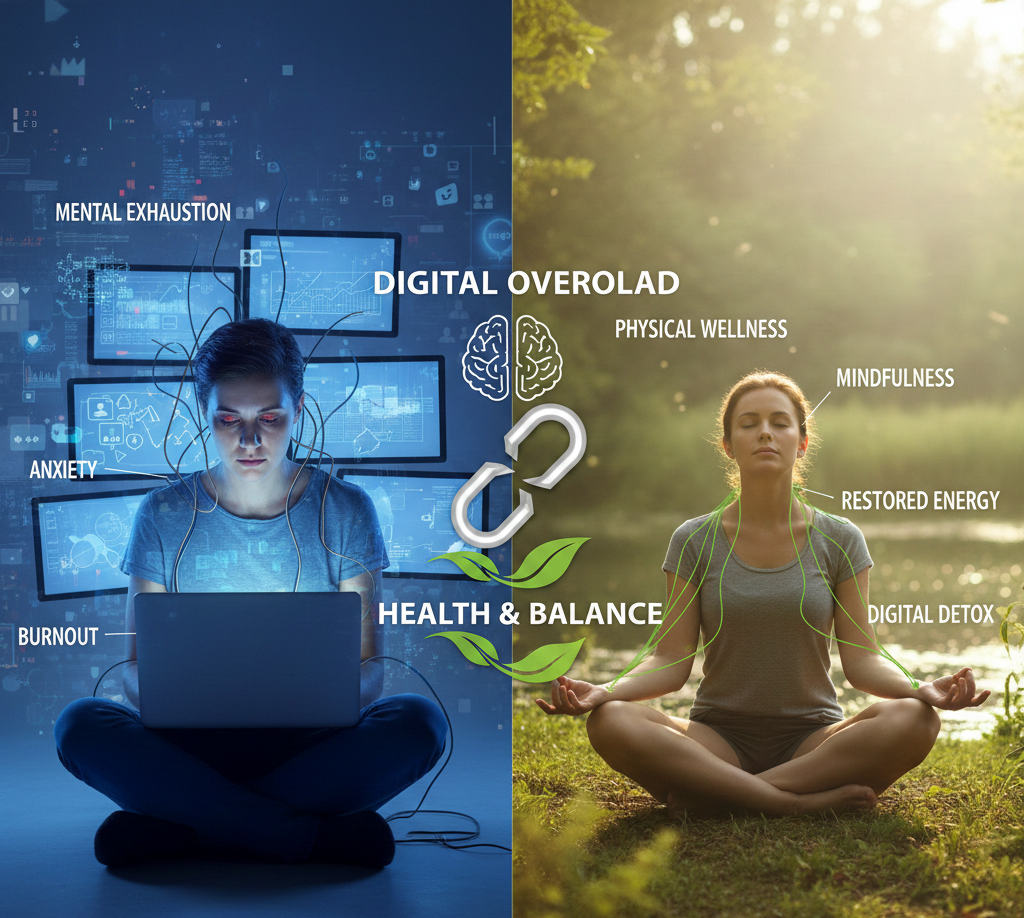
Being constantly connected is slowly disconnecting us—from our bodies, our minds, and ourselves.
Introduction: When Being Online Never Really Ends
From the moment we wake up to the last minutes before sleep, screens dominate our day. Phones, laptops, tablets, and smart devices have become essential—but constant digital exposure is quietly taking a toll. Digital overload doesn’t announce itself loudly; it shows up as fatigue, anxiety, poor sleep, and a sense of mental clutter. Over time, this constant stimulation affects both mental and physical health in ways many people don’t immediately recognize.
What Digital Overload Really Means
Digital overload occurs when the brain is exposed to excessive information, notifications, and screen time without adequate rest. The mind is forced to process messages, news, social media, and work tasks continuously. This constant input keeps the nervous system in a state of alertness, leaving little space for recovery, reflection, or true relaxation.
Impact on Mental Health: Anxiety, Stress, and Burnout
Excessive screen use overstimulates the brain, increasing stress hormones like cortisol. Constant notifications create a sense of urgency, making it difficult to relax or focus deeply. Over time, this can lead to anxiety, irritability, reduced attention span, and emotional exhaustion. Many people feel mentally “tired but wired,” unable to switch off even when they want to.
How Digital Overload Disrupts Sleep Patterns
Screen exposure—especially before bedtime—interferes with the body’s natural sleep cycle. Blue light suppresses melatonin, the hormone responsible for sleep. Scrolling late into the night keeps the brain active, delaying rest and reducing sleep quality. Poor sleep then worsens mental clarity, mood stability, and physical energy the next day.
Physical Health Effects You Might Be Ignoring
Digital overload doesn’t just affect the mind—it impacts the body as well. Prolonged screen use can cause eye strain, headaches, neck and back pain, and poor posture. Long periods of inactivity contribute to muscle stiffness and reduced circulation. Over time, these physical stresses accumulate, leading to chronic discomfort and fatigue.
Emotional Comparison and Social Media Fatigue
Social media exposure often leads to unconscious comparison. Constantly viewing curated lives and achievements can trigger self-doubt, dissatisfaction, and emotional insecurity. This emotional strain may go unnoticed, but it slowly erodes confidence and contentment, making relaxation feel harder than it should.
Why the Nervous System Needs Digital Breaks
The nervous system requires moments of stillness to regulate itself. Without breaks, it remains in a heightened state, affecting digestion, immunity, and hormonal balance. Digital overload keeps the body in “on” mode, preventing true rest and recovery. Over time, this imbalance affects overall health and resilience.
Signs Your Body Is Asking for a Digital Reset
Frequent headaches, constant fatigue, difficulty concentrating, restlessness, and irritability are often signs of digital overload. Feeling overwhelmed without a clear reason or reaching for your phone reflexively may also indicate the need for mindful digital boundaries.
Simple Ways to Reduce Digital Overload
Reducing digital overload doesn’t mean abandoning technology. Small changes—like scheduled screen breaks, limiting notifications, tech-free meals, and screen-free time before bed—can significantly improve mental clarity and physical comfort. Creating intentional offline moments allows the mind and body to reset naturally.
Reconnecting With Your Body and Mind
Spending time away from screens helps restore awareness of the body and surroundings. Activities like walking, stretching, journaling, or simply sitting in silence can calm the nervous system. These moments of presence help rebuild mental focus and emotional balance.
Conclusion: Balance Is the New Wellness
Digital tools are powerful, but constant exposure comes at a cost. Protecting mental and physical health requires conscious balance—not constant availability. When you create space away from screens, you allow your body and mind to breathe, reset, and heal. True wellness begins when technology supports life instead of consuming it.