
Daily Mental Habits Every Student Needs”
Discover powerful daily mental habits for students that improve focus, memory, productivity, and emotional balance. Simple routines that actually work for academic success.
How to Build Daily Mental Habits That Work for Students
In today’s competitive academic world, students are constantly juggling exams, assignments, competitive tests, and personal growth. Whether you’re preparing for university exams, competitive exams like UGC NET, or simply trying to improve focus, daily mental habits can completely transform your productivity and academic performance.
The truth is — success in studies is less about intelligence and more about consistent mental discipline. Let’s explore how to build powerful daily mental habits that actually work for students and help you stay focused, confident, and academically strong.
Why Mental Habits Matter More Than Motivation
Motivation is temporary. It comes and goes. But mental habits for students create long-term academic growth.
When you train your mind daily:
You reduce procrastination
You improve concentration
You increase memory retention
You manage stress better
You develop academic consistency
Successful students don’t rely on mood — they rely on structured daily routines and positive mental conditioning.
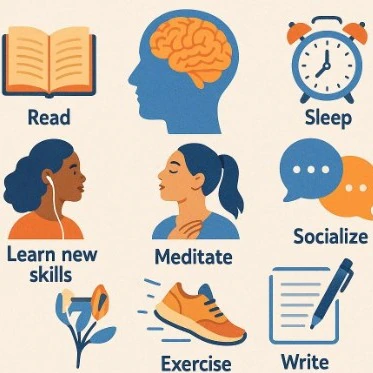
1. Start Your Day With Mental Clarity Rituals
Your morning mindset shapes your entire day.
Practice a 5-Minute Mind Reset
Before checking your phone:
Sit quietly
Take 10 deep breaths
Visualize completing your study goals
Repeat positive affirmations like:
“I am focused.”
“I understand concepts easily.”
“I am consistent.”
This simple morning mental habit improves student productivity and concentration levels.
2. Set 3 Priority Study Goals Daily
Instead of overwhelming yourself with a long to-do list, follow the 3-Task Rule.
Every morning, write:
1 major academic goal (e.g., finish one chapter)
1 revision goal
1 skill-building goal (mock test, writing practice, etc.)
This builds:
Mental clarity
Time management skills
Academic discipline
Students who set daily academic priorities perform better in exams and reduce last-minute stress.
3. Use the 45-10 Focus Formula
One of the most powerful mental habits for students is structured focus time.
The 45-10 Rule:
Study for 45 minutes (deep focus)
Take 10 minutes break (stretch, hydrate, breathe)
This improves:
Memory retention
Brain efficiency
Long-term concentration power
Short breaks prevent mental fatigue and improve cognitive performance.
4. Train Your Brain With Active Recall
Passive reading does not build strong memory.
Instead:
Close your book after studying
Write down what you remember
Explain the topic out loud
Teach someone else
Active recall is scientifically proven to improve long-term retention and exam performance.
This mental habit is especially powerful for competitive exam preparation.
5. Build Emotional Regulation Habits
Students often struggle not because of lack of knowledge but because of:
Stress
Comparison
Fear of failure
Anxiety
Daily emotional control practices include:
Journaling for 5 minutes
Writing 3 things you’re grateful for
Avoiding negative comparison on social media
Emotional balance improves academic confidence and performance.
6. Develop a Night Reflection Routine
Before sleeping, ask yourself:
What did I learn today?
Where did I waste time?
What will I improve tomorrow?
Self-reflection builds:
Self-awareness
Discipline
Growth mindset
Students who reflect daily improve faster than those who study randomly.
7. Protect Your Mental Energy
Mental strength isn’t just about studying — it’s about managing energy.
Avoid:
Late-night scrolling
Negative peer groups
Multitasking
Studying without breaks
Instead:
Sleep 7–8 hours
Stay hydrated
Eat brain-friendly foods (nuts, fruits, proteins)
Exercise 20–30 minutes daily
Physical wellness supports mental sharpness and cognitive performance.
8. Build the Habit of Consistency Over Intensity
Many students study 10 hours one day and 0 hours the next. That destroys mental rhythm.
Instead:
Study 4–6 focused hours daily
Maintain a fixed schedule
Track your progress weekly
Consistency builds confidence. Confidence builds results.
9. Practice Digital Discipline
Your biggest distraction is your phone.
Build these digital habits:
Keep phone in another room during study
Turn off notifications
Use website blockers
Study offline when possible
Digital discipline increases attention span and reduces procrastination.
10. Develop a Growth Mindset
Students with a growth mindset believe:
Intelligence can improve
Mistakes are learning tools
Failure is feedback
Instead of saying:
“I’m bad at this subject.”
Say:
“I haven’t mastered this yet.”
This shift rewires your brain for academic improvement.

Daily Mental Habit Blueprint for Students
Here’s a simple structure you can follow daily:
Morning
5-minute mindfulness
Set 3 study goals
Afternoon
2–3 focused study blocks (45-10 rule)
Active recall practice
Evening
Light revision
Short exercise
Night
5-minute reflection
Plan tomorrow
Follow this for 30 days, and you’ll notice:
Increased focus
Better memory
Reduced stress
Improved exam performance.
Final Thoughts
Academic success isn’t about studying non-stop. It’s about training your mind daily.
If you start building small, powerful mental habits today, your future self will thank you. Consistency, clarity, and mental discipline are your biggest competitive advantages.
The key question is — are you ready to train your mind like you train your body?
Start today. Stay consistent. Watch the transformation.
Frequently Asked Questions (FAQ)
1. What are the best daily mental habits for students?
The best daily mental habits for students include morning mindfulness, setting 3 priority goals, using focused study sessions (45-10 rule), practicing active recall, maintaining emotional balance, and doing night reflections.
2. How can students improve focus while studying?
Students can improve focus by eliminating phone distractions, studying in 45-minute blocks, taking short breaks, practicing deep breathing, and maintaining consistent sleep schedules.
3. How long does it take to build strong study habits?
It typically takes 21–30 days to build consistent mental habits. However, long-term discipline develops over 60–90 days of continuous practice.
4. Why do students struggle with consistency?
Students struggle with consistency due to lack of structure, digital distractions, emotional stress, unrealistic goals, and poor time management.
5. Can mental habits improve exam performance?
Yes. Strong mental habits improve memory retention, concentration, stress control, and confidence — all of which directly enhance exam performance.

